
CAR
DIAGNOSTICS
FAULT CODE READING AND DIAGNOSIS IN PRUSZKÓW
Warning light on the dashboard, loss of power or an electrical fault? A fault code on its own does not always point to the cause. At REDOX LAB in Pruszków, near Warsaw, we read the codes stored in your car's control units, check what is really behind them and explain our findings before recommending any repair.
INTERPRETING FAULT CODES
A FAULT CODE IS WHERE DIAGNOSIS BEGINS, NOT WHERE IT ENDS
A control unit stores a fault code when it detects a signal or operating value outside the range it treats as normal. The code points to the system or circuit where the problem was detected, but not always to the specific part that has failed. The same code can be caused by a faulty sensor, a broken wire, a corroded connector or a problem elsewhere in the system.
That is why we treat the read-out as a starting point. We analyse live data and check the wiring and the components involved to establish whether the code points to the cause of the fault or only to its effect. Only then do we go through the findings with you and recommend the next steps.
We diagnose cars of all makes, whether a warning light has come on, something does not feel right, the car has been in a collision or it has just been repaired. Because mechanical work, collision repairs and refinishing are all carried out in one place, you do not need to look for another garage after the diagnosis.
SERVICE SCOPE
WHAT DOES A DIAGNOSTIC CHECK INCLUDE?
READING AND INTERPRETING FAULT CODES
We read the fault codes from the control units available for your model and establish what they mean for your car and whether the fault is still present.
DASHBOARD WARNING LIGHTS
We find out why the engine management, ABS, airbag or another warning light has come on, including when it only appears from time to time.
ENGINE AND GEARBOX ELECTRONICS
We analyse fault codes and live data in cases of power loss, rough running, jerking, starting problems or a gearbox in limp mode.
ABS, ESP AND AIRBAGS
We trace faults in the ABS, ESP and airbag (SRS) systems, which have a direct impact on driving safety.
ELECTRICAL FAULTS
We track down the causes of faulty electrical equipment, power supply problems, open and short circuits, and damaged wiring or connectors.
AFTER A COLLISION AND AFTER REPAIRS
After a collision, we check the sensors, wiring and systems around the impact area; after a repair, we recheck the fault memory and the operation of the repaired systems.
PROCESS
HOW DOES A DIAGNOSTIC CHECK WORK?
- 01
ENQUIRY
Contact us by phone or through the form. Tell us the make and model of your car and describe the symptoms: which warning light is on and when the problem occurs.
- 02
VEHICLE CHECK-IN
We ask about the circumstances of the fault, as knowing when and in what conditions it appears often helps to narrow down the search.
- 03
FAULT CODE READ-OUT
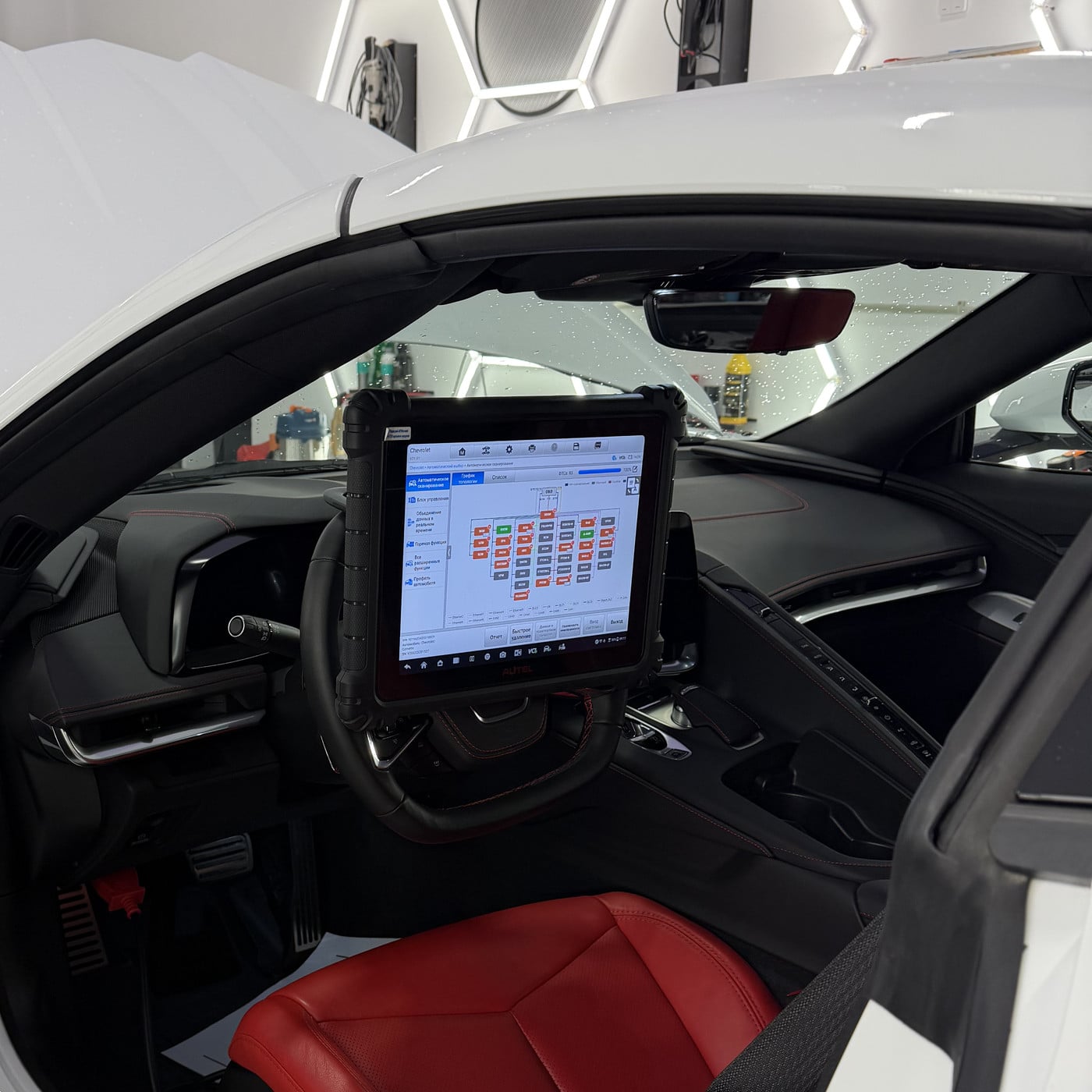
We connect a diagnostic tool, read the fault codes and analyse live data from the relevant systems.
- 04
VERIFICATION
We check whether the code points to the cause or the effect by inspecting the wiring, connectors and components, with a road test where needed.
- 05
FINDINGS AND NEXT STEPS
We explain what we have found, what needs repairing and in what order. The decision on the repair is yours.
- 06
REPAIR AND FINAL CHECK
If you ask us to carry out the repair, we complete the agreed work and then check the fault memory and the system again.
FIRST STEPS
A WARNING LIGHT HAS COME ON. WHAT NEXT?
The colour of a warning light tells you how urgent the situation is. A red light, such as the oil pressure, coolant temperature or brake warning light, usually means that driving on could be unsafe or cause serious damage. In that case, stop somewhere safe and check what the light means in the owner's handbook.
An amber or yellow light indicates a fault that should be diagnosed as soon as possible. Pay particular attention to a flashing engine management light: it often signals a misfire that can damage the catalytic converter, so driving should be kept to a minimum.
Please do not clear the fault codes yourself before your visit. Clearing a code does not remove the cause, and the information stored in the control unit helps to establish the conditions in which the fault occurred.
COST AND TIMESCALE
HOW MUCH DOES A DIAGNOSTIC CHECK COST AND HOW LONG DOES IT TAKE?
The cost and time involved depend mainly on the type of fault. Reading and verifying a code behind a warning light that stays on is a different task from tracing a fault that appears only intermittently, affects several systems or requires trim panels to be removed to check the wiring and connectors.
Once we have discussed the symptoms, we will tell you where we plan to start. If it turns out that further checks are needed, we will let you know before carrying out any additional work. Should the findings show that a repair is required, we agree the scope, cost and expected timescale with you before any work begins.
WHAT SHOULD YOU HAVE READY?
The make, model and year of the car are enough to get started, together with a description of the symptoms: which warning light is on, when the problem occurs (with a cold engine, under acceleration, after rain) and what happened beforehand, such as a collision, a repair or a battery replacement. A photo of the dashboard showing the warning light or message is helpful, as are the results of any previous diagnostics. You do not need to know the cause of the fault to book a visit.
WHY REDOX LAB
A RELIABLE DIAGNOSIS AND CLEAR RECOMMENDATIONS
THE CAUSE, NOT JUST THE CODE
We verify the read-out before recommending a repair. The aim is to fix the cause, not to replace parts by trial and error.
EXPLANATIONS IN PLAIN LANGUAGE
We tell you what we have confirmed, what needs urgent attention and what can wait. The decision on the next steps is yours.
DIAGNOSIS AND REPAIR IN ONE PLACE
Mechanical work, collision repairs, refinishing and diagnostics under one roof. If you decide to go ahead with the repair, the same team takes care of it.
COLLISION REPAIR EXPERTISE
As a collision repair centre, we know how an impact can affect sensors, wiring looms and safety systems.
TECHNOLOGY AND EXPERIENCE
We diagnose cars of all makes, combining modern equipment with the practical knowledge of our team.
WARRANTY
Our work is covered by a warranty, with the exact scope agreed for each job.
QUESTIONS AND ANSWERS
CAR DIAGNOSTICS - FAQ
Is reading the fault code enough to know what needs repairing?
Not always. The code points to the system or circuit in which the control unit detected a problem, but the same code can have several different causes. That is why we verify the result before recommending a repair.
The warning light has gone out by itself. Is a diagnostic check still worthwhile?
Yes. The control unit may have stored the fault in its memory, and an intermittent fault can come back. A read-out shows what happened before the problem gets worse.
Do you diagnose cars of all makes?
Yes. The range of data available depends on the model and year of the car, so it helps to include these details when you get in touch.
Should the electronics be checked after a collision if the car drives normally?
Yes. An impact can damage sensors, wiring or parts of the safety systems, and the effects are not always noticeable straight away. When we carry out a collision repair at REDOX LAB, diagnostics is one of the stages of the process.
How long does a diagnostic check take?
It depends on the fault. Reading the codes is the first step; the time needed for verification is determined by whether the problem is constant or intermittent and how many systems are involved. We give you an estimate after discussing the symptoms and carrying out an initial read-out.
Do I have to have the repair done at REDOX LAB after the diagnosis?
No. We go through the findings and recommendations with you, and the decision on the repair is yours. If you ask us to carry it out, we agree the scope, cost and timescale before any work begins.
Is the work covered by a warranty?
Yes. Our work is covered by a warranty, and we explain the scope that applies to your job.